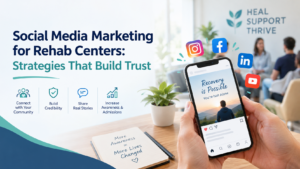
Social Media Marketing for Rehab Centers: Strategies That Build Trust
Social Media Marketing for Rehab Centers: Strategies That Build Trust...
Read More →
Most families don’t go looking for a rehab center on a good day. They search late at night, worried and unsure who to believe. That’s why the digital marketing mistakes for rehab centers below matter more than they would for almost any other business. A wrong move costs you clicks, and it can also cost you a family’s confidence at the moment they needed it most.
If you run or manage a treatment facility in Mumbai, Thane, or anywhere in the region, this guide covers what commonly goes wrong with digital marketing for rehab centers and how to fix it, without shortcuts or hype.
Someone buying a phone compares prices in ten minutes. Someone choosing addiction treatment for a family member is anxious, embarrassed, and often deciding under pressure.
They want to know three things: Is this place legitimate? Will my family member be treated with dignity? Can I reach a real person right now?
Good rehab center digital marketing answers these questions clearly. Most of the mistakes below happen when a center forgets this and starts marketing like a generic service business.
A common scenario: a center has a beautiful homepage with stock photos of sunsets and smiling people, but no doctor names, no registration details, and no clear explanation of the treatment process.
Visitors read that as a lack of transparency. Your site should include:
Most enquiries come from phones, so check how your site loads on a mid-range Android device over an average mobile connection. If it’s slow or clunky, you’re losing people before they read a word.
SEO for rehab centers is competitive, and small errors add up. These are the common SEO mistakes we see most often:
Do you know which of your pages actually bring in visitors, and which ones just exist? A quick check in Google Search Console usually answers that.
Most people who contact a center want one within reach, so they can visit, meet the team, and stay involved. That makes local search a big part of SEO mistakes for rehab centers worth fixing early.
Common local gaps:
On that last point, replies to reviews need care in this field. Never confirm that someone was a patient, even to thank them. A safe response is something like: “Thank you for your feedback. We’d welcome a conversation offline to understand more.” Patient privacy comes first.
Also, never list a fake or virtual address to appear “local.” It violates Google’s guidelines and destroys credibility if a family shows up.
“100% cure guaranteed.” “Success rate: 95%.” Statements like these are easy to write and hard to defend. Recovery is a long-term process, and no ethical clinician promises guaranteed outcomes.
Beyond the ethics, unverifiable claims can invite complaints and breach advertising standards. Ad platforms also apply extra restrictions to addiction-related advertising, and the rules differ by country and change over time, so check the current policy before you spend on ads.
A stronger approach is to show, not promise:
Trust built this way lasts longer than a bold claim.
Testimonials are powerful, but in rehab they carry serious privacy risk. Stigma around addiction is still strong, and a recognizable photo or story shared without proper consent can harm someone.
Some safer habits:
If a story would embarrass the person telling it if a neighbor saw it, don’t publish it.
A center can do everything right online and still lose an admission because nobody picked up the phone.
Picture a parent who fills out a contact form at 10 pm and hears back two days later. By then, they’ve probably called someone else.
Fixes that don’t require a big budget:
Your marketing gets people to reach out. Your response decides whether they stay.
Some centers depend entirely on paid ads. Others only publish blog posts and wait. Both are fragile.
Paid ads stop the moment you stop paying, and can be paused if policies change. SEO takes months to build. A healthier mix includes:
Traffic and impressions look good in a report, but they don’t tell you whether the marketing works.
Track what actually matters:
Simple call tracking and a shared enquiry log (with patient privacy protected) can reveal which efforts deserve more of your budget. Without this, you’re guessing.
Many centers only publish pages about their own services. But a lot of searchers are still trying to understand what they’re facing.
Helpful content might cover:
This kind of content builds authority and earns trust well before a family is ready to call. It also supports digital marketing for rehab centers in a way that feels helpful rather than pushy.
Ask yourself honestly:
If any answer is “not really,” you know where to start.
The most damaging rehab marketing mistakes come from forgetting who you’re talking to: worried families who need honesty, clarity, and a real person on the other end. Fix your website’s transparency, avoid the common SEO mistakes, protect patient privacy, and measure what matters, and your marketing will start to feel more like help than advertising.
For centers in Mumbai and Thane, strong local visibility combined with honest, useful content is often the most sustainable route. If you’d like a second pair of eyes on your current approach, an SEO and website audit is a low-pressure place to begin.
The most common are a website that lacks transparency (no credentials or licensing details), unverifiable claims like guaranteed cures, careless use of patient stories, slow response to enquiries, and not tracking which efforts bring real admissions.
People searching for treatment are often anxious and cautious, so trust signals matter more. Content needs to be accurate, compassionate, and written or reviewed by qualified professionals, and pages should answer real questions rather than just chase keywords.
Avoid stuffing keywords, putting all treatments on a single page, publishing thin or copied content, ignoring search intent, and neglecting mobile speed and local optimization.
Yes. A strong website, local SEO, a well-managed Google Business Profile, and helpful educational content can generate steady enquiries over time. Paid ads can supplement this where platform policies allow.
Claim and fully complete your Google Business Profile, keep your name, address, and phone number consistent across directories, respond to reviews without breaching patient privacy, and create location-relevant content that helps nearby families.